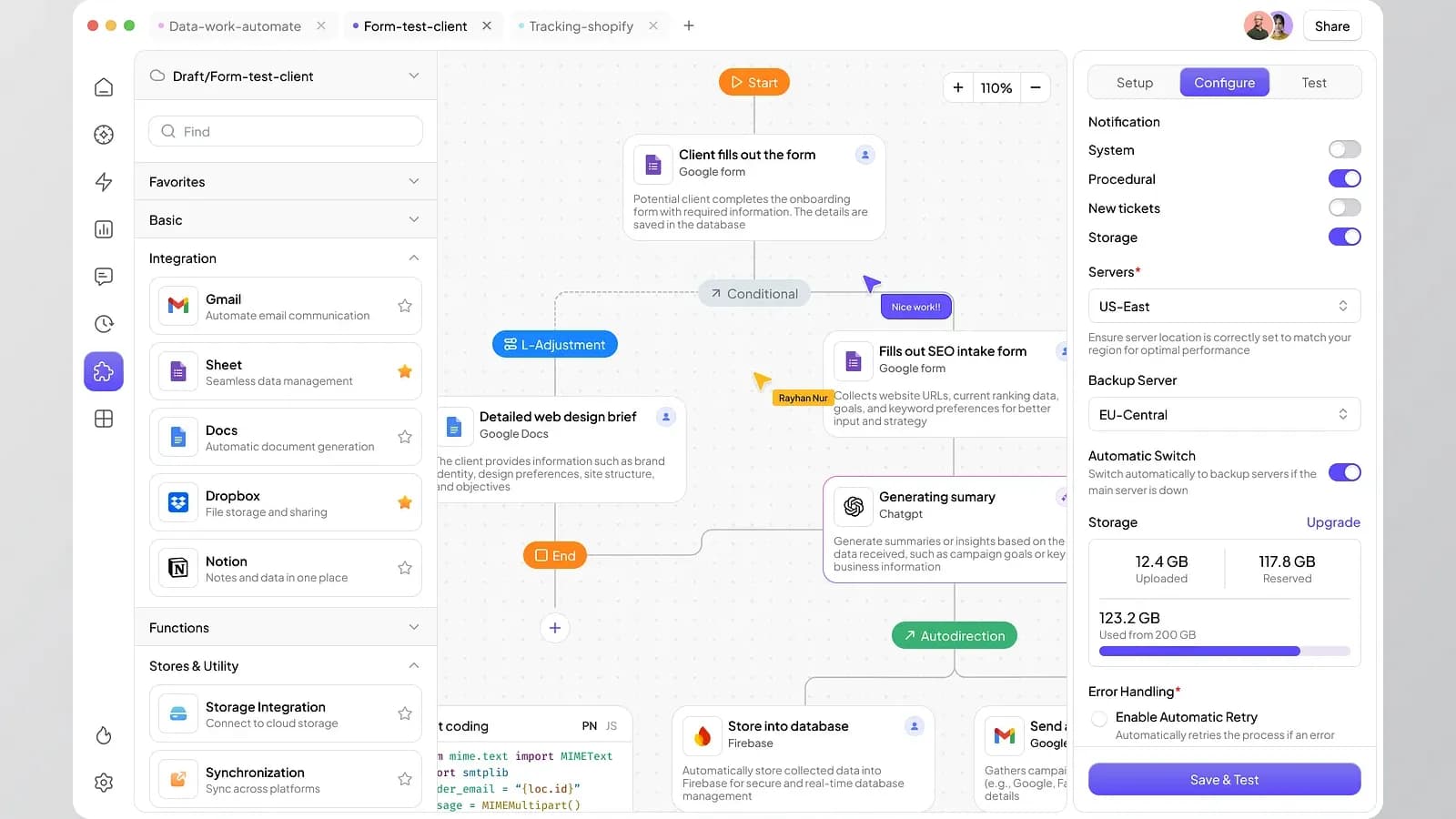
One person manages leads, another customers, someone else projects, and reports are compiled by hand. A CRM and business automation system connects the whole lifecycle — from website enquiry to payment.
CRM and business automation software connects the full customer lifecycle — website enquiry, lead, follow-up, quotation, customer, project, invoice and payment — in one system, and automates repetitive steps such as lead creation, assignment, follow-up tasks, notifications and reporting. In Kerala, it can be custom-built around each industry’s workflow.
- Automation reduces repetitive manual work — it doesn’t replace employees.
- A CRM can be the core that links leads, sales, projects, invoices and payments.
- Website forms become the entry point: enquiry → lead → notification → follow-up.
- Start by identifying manual processes, then digitise, connect, automate and measure.
On this page
- What is business automation?
- A complete business workflow
- CRM as the core of business operations
- Example: a real estate business
- Example: a digital agency
- Example: a construction company
- Business automation in Kochi, Kottayam and Kerala
- Features of a CRM and automation platform
- Website + CRM integration
- Why business automation matters
- Custom CRM development vs generic automation tools
- Building a business operating system
- Custom CRM and business automation development in Kerala
- Your business can run on one connected system
- Frequently asked questions
A growing business can quickly become complicated. One employee manages leads. Another handles customers. Someone else manages projects. Invoices are created separately. Management prepares reports manually. Information is spread across spreadsheets, emails, WhatsApp conversations and different software platforms — and the result is wasted time and missed information.
A properly designed CRM and business automation system connects these processes into one digital workflow.
What is business automation?
Business automation means using software to reduce repetitive manual work. For example:
- Instead of an employee manually entering every website enquiry into a spreadsheet, the system automatically creates a lead.
- Instead of manually checking which customers need follow-up, the system generates follow-up tasks.
- Instead of preparing certain reports manually, the dashboard calculates them from the stored data.
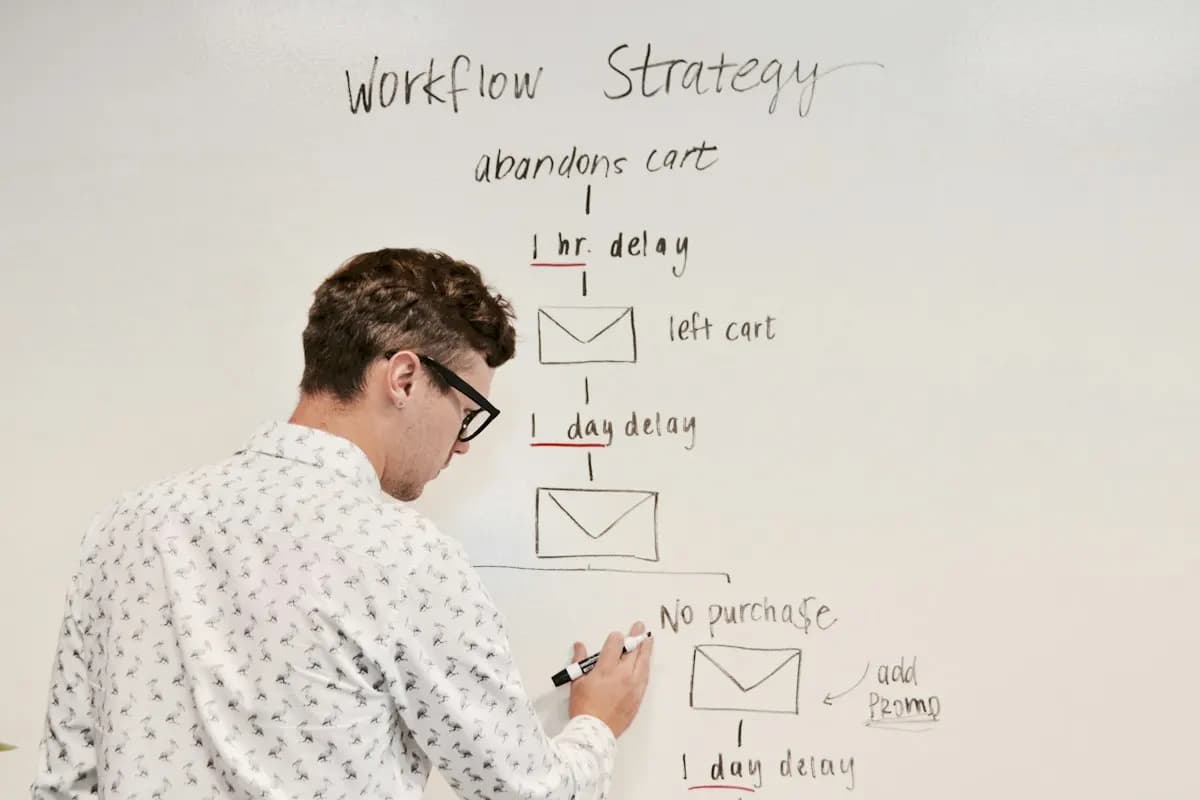
A complete business workflow
A custom system can connect the complete customer lifecycle. For example:
- Website
- Lead
- Follow-up
- Quotation
- Customer
- Project
- Invoice
- Payment
This creates a connected business process.
CRM as the core of business operations
A CRM does not have to be limited to contact management. A properly designed CRM can become the centre of a business’s customer lifecycle, connecting:
- Leads
- Customers
- Sales
- Projects
- Tasks
- Invoices
- Payments
- Reports
This lets management understand what is happening across the organisation.
Example: a real estate business
Consider a real estate company. A potential customer submits an enquiry on the website. The system can automatically:
- Create lead
- Record property interest
- Assign salesperson
- Create follow-up
- Schedule site visit
- Record visit
- Create quotation
- Update lead status
- Convert to customer
- Track booking
This significantly reduces manual administration.
Example: a digital agency
A digital agency could use:
- Lead
- Requirement
- Proposal
- Client
- Project
- Task
- Invoice
- Payment
The same platform gives management information about active projects, pending invoices and sales opportunities.
Example: a construction company
A construction company could have:
- Enquiry
- Customer
- Project
- Quotation
- Contract
- Progress
- Invoice
- Payment
- Completion
A custom application can connect these processes.
Business automation in Kochi, Kottayam and Kerala
Businesses in Kochi, Ernakulam, Kottayam, Changanassery and Kollam can use custom business applications to digitise workflows. The exact system should depend on the industry. A company should not build software simply because another company has it — the software should solve a specific operational problem.
Features of a CRM and automation platform
A custom platform can include:
CRM
Manage leads and customers.
Lead management
Track enquiries and sales opportunities — see lead management software.
Workflow automation
Automate repetitive tasks.
Project management
Track customers and projects.
Finance
Manage invoices, expenses and payments.
Notifications
Alert employees about important activities.
Dashboards
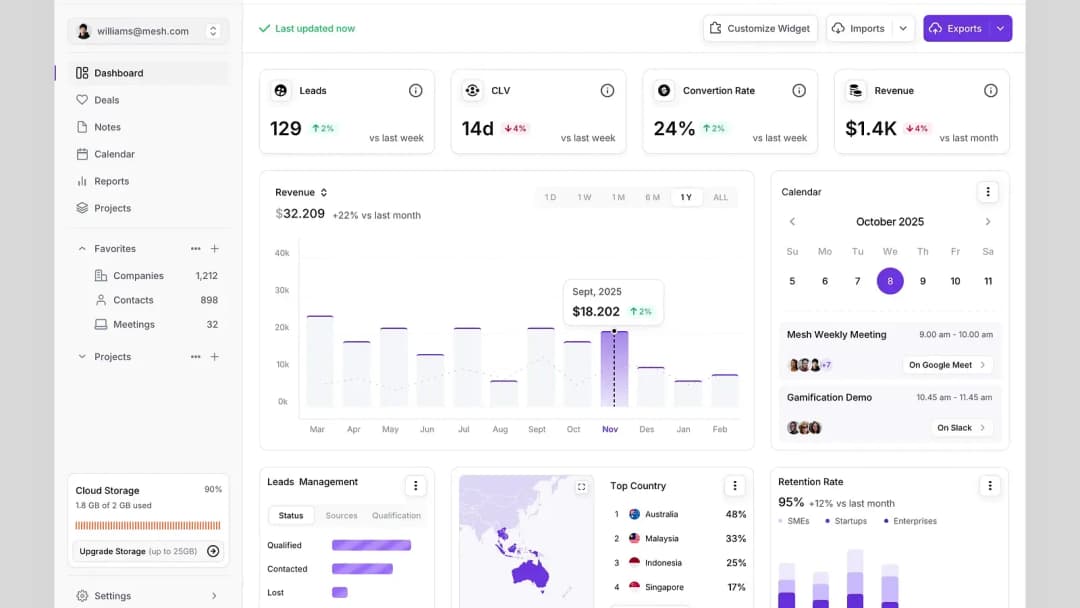
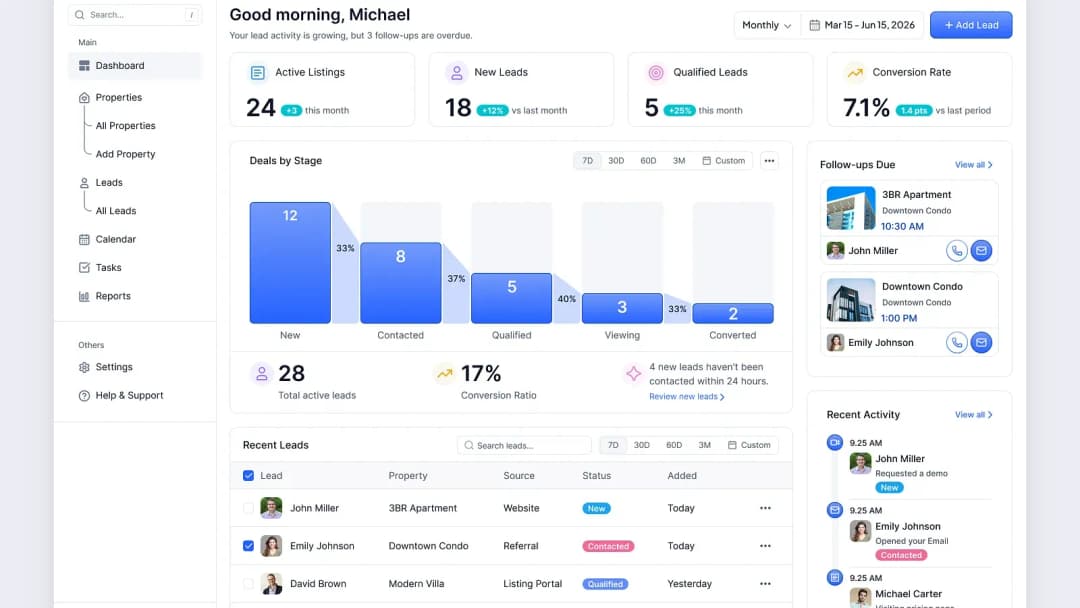
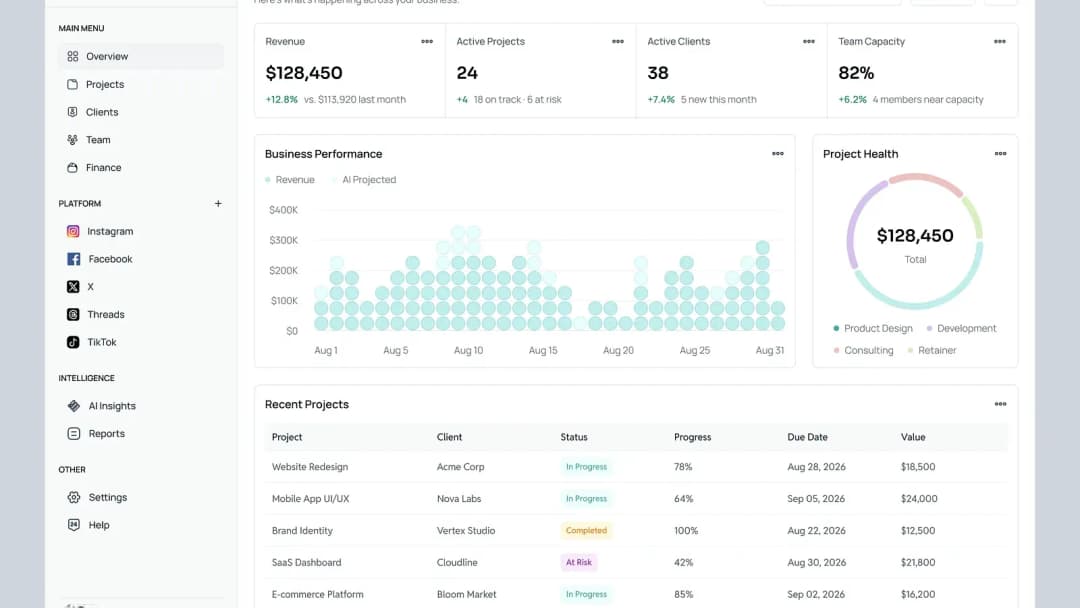
Provide real-time business information.
Reports
Analyse sales, customers, projects and financial information.
Website + CRM integration
Your website should not necessarily operate separately from your internal systems. It can become the entry point into your business software. For example:
- Customer visits website
- Submits enquiry
- CRM creates lead
- Salesperson receives notification
- Follow-up scheduled
- Proposal generated
- Customer converted
This creates a much more connected digital experience.
Why business automation matters
Automation is not about replacing employees. It is about letting employees spend less time on repetitive administrative work.
- Instead of spending 30 minutes every day compiling lead reports, a manager views the information directly on a dashboard.
- Instead of searching through spreadsheets for customer information, employees search the CRM.
- Instead of manually checking every lead, the sales team sees their pending follow-ups.

Custom CRM development vs generic automation tools
Automation tools can be extremely useful. However, businesses sometimes reach a point where their processes are too specific for generic tools. For example:
“When a lead comes from our website, assign it according to location, create a follow-up, connect it to the appropriate project category and update our dashboard.”
A custom application can be designed around such workflows.
Building a business operating system
The long-term goal for some businesses is not simply a CRM. It is a complete business operating system — CRM, sales, projects, customers, finance, reports and automation, all within one platform. This gives management a single view of the business. Read more about business management software.
Custom CRM and business automation development in Kerala
Jacob Dan Ventures develops websites and web applications and builds custom business software based on individual requirements. If your business needs CRM development, lead management software, business automation or a custom web application in Kerala, the project begins by analysing your current workflow. The objective is simple:
- Identify the manual processes
- Digitise them
- Connect them
- Automate where appropriate
- Measure the results
Your business can run on one connected system
The future of business software is not about having more applications — it is about having better-connected systems. When your website, leads, customers, projects, finance and reporting communicate with each other, your business gets a clearer view of its operations. If you are still managing critical information across spreadsheets, WhatsApp and disconnected software, a custom CRM or business automation platform may be the next step.
Frequently asked questions
What is CRM automation?
CRM automation uses software to automate repetitive activities such as lead assignment, follow-ups, notifications and data updates.
Can CRM software be connected to a website?
Yes. Website forms and applications can send information directly to a CRM through integrations or APIs.
Can a CRM include finance?
Yes. A custom CRM can include invoicing, expenses, payments and financial dashboards when required.
Can business automation work for small businesses?
Yes. Automation is useful for any business with repetitive processes or growing volumes of customers and enquiries.
Can you build a complete business management system?
Yes. A custom web application can combine CRM, sales, projects, finance, reporting and automation depending on the requirements.